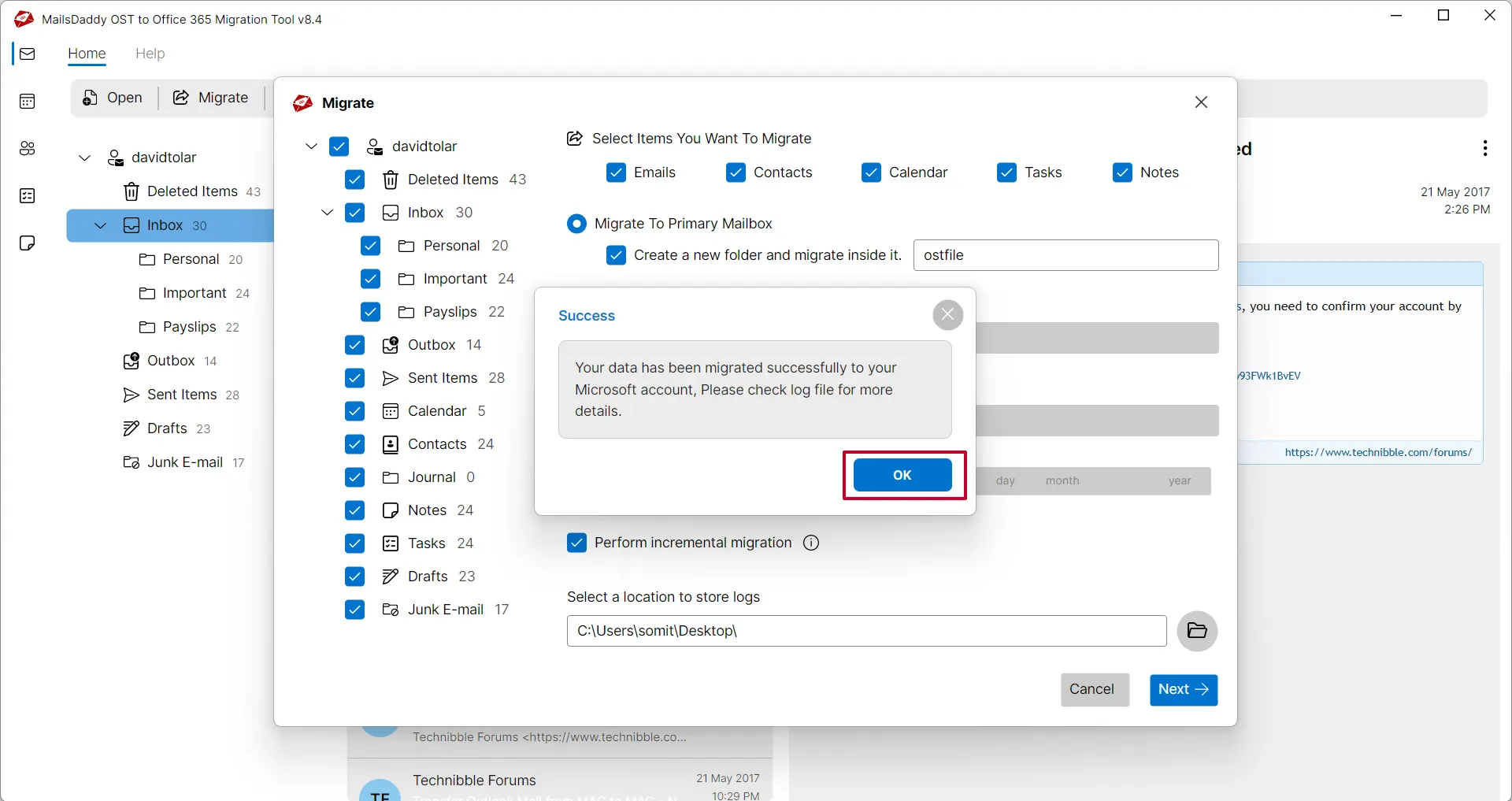
Working Guide Of The MailsDaddy OST To Office 365 Tool

Step 1: Download and install the OST to Office 365 Migration Tool (Installation Guide included). Launch the software and click the “Get Demo” button to use the free trial. If you’ve already purchased the software, you can activate the full version directly.
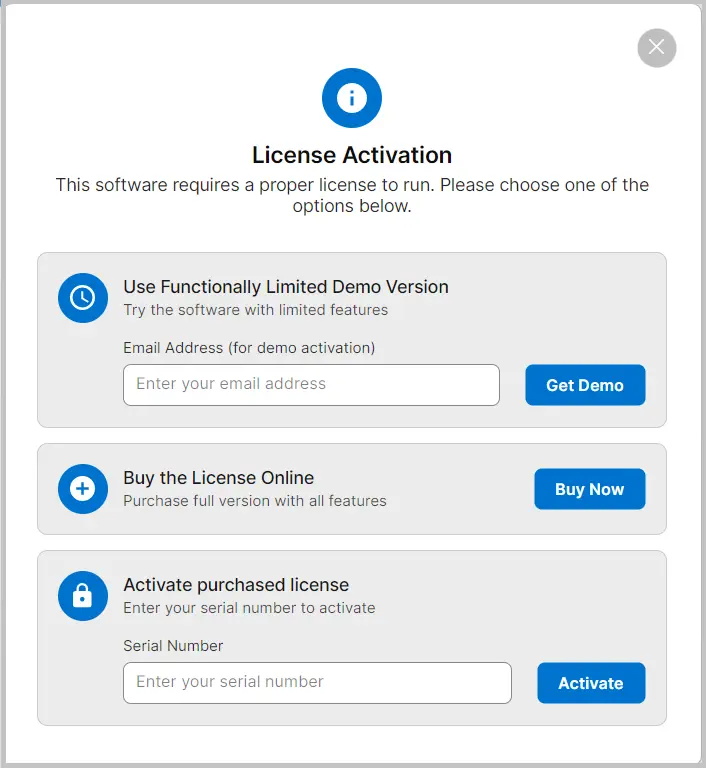
get demo

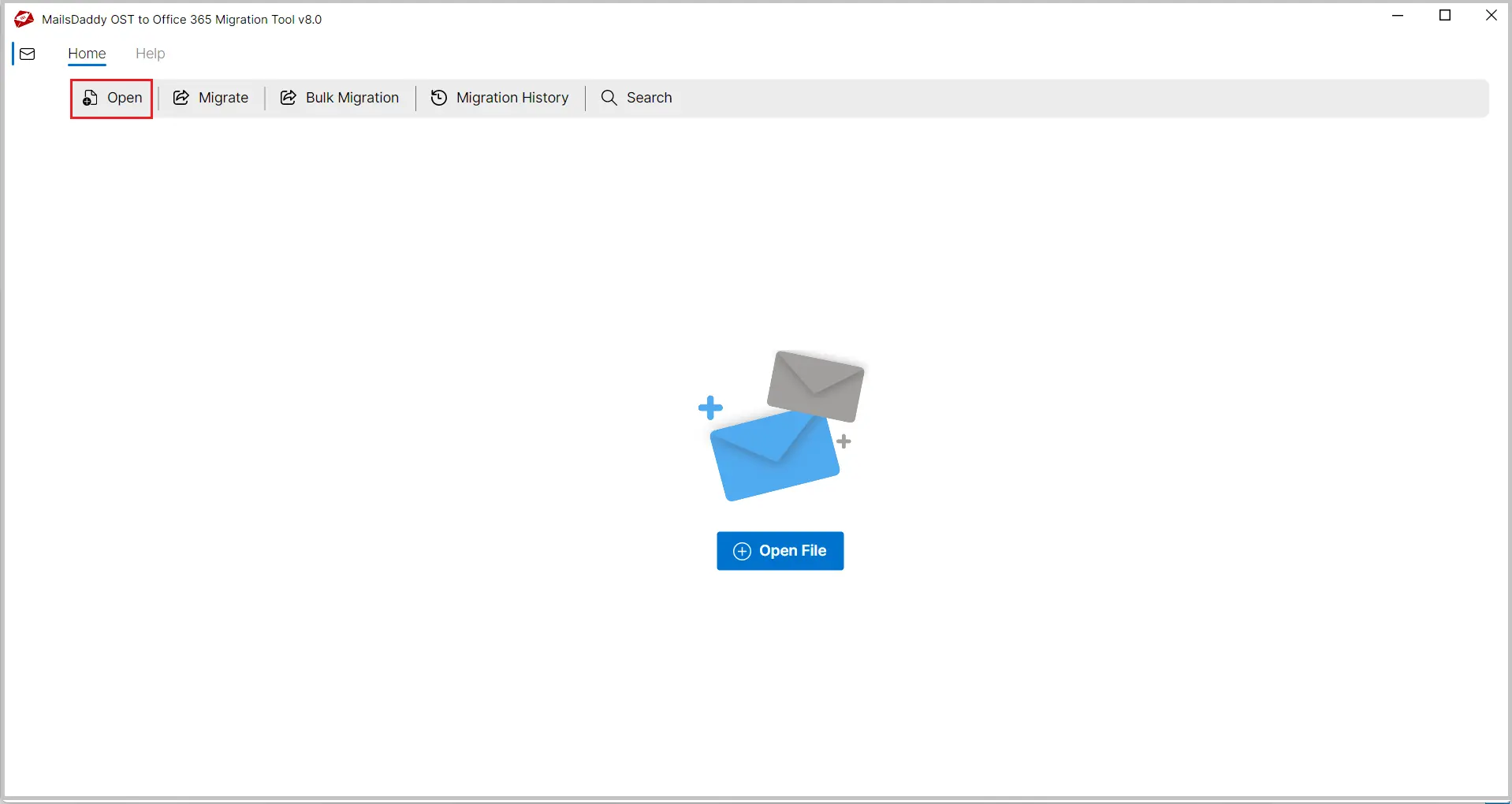
Step 2: On the first screen, click the “Open” button to browse and select NSF files from your local system.

load nsf file

Step 3: You can now view the complete NSF file database in the software’s preview panel.
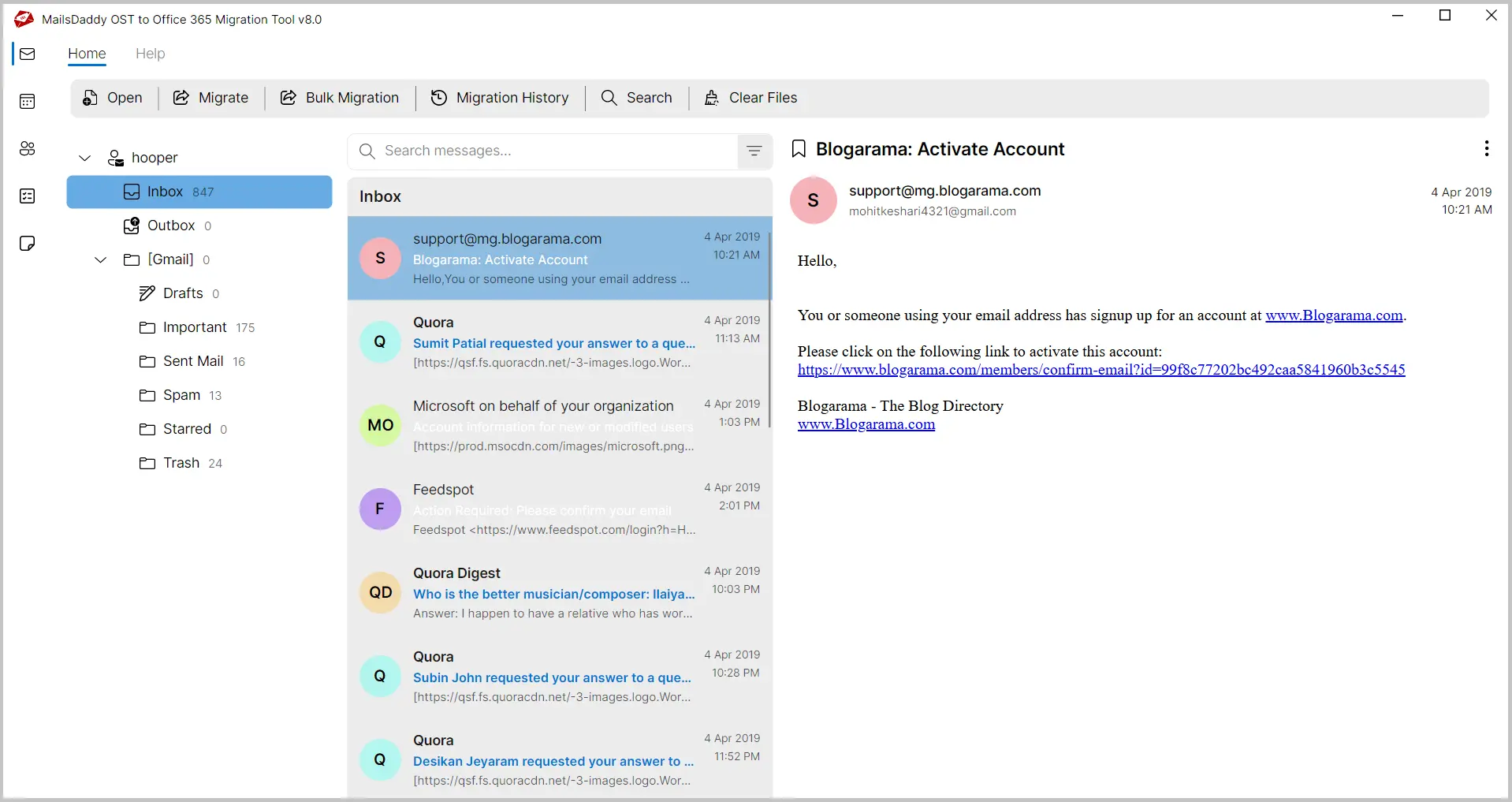
preview window

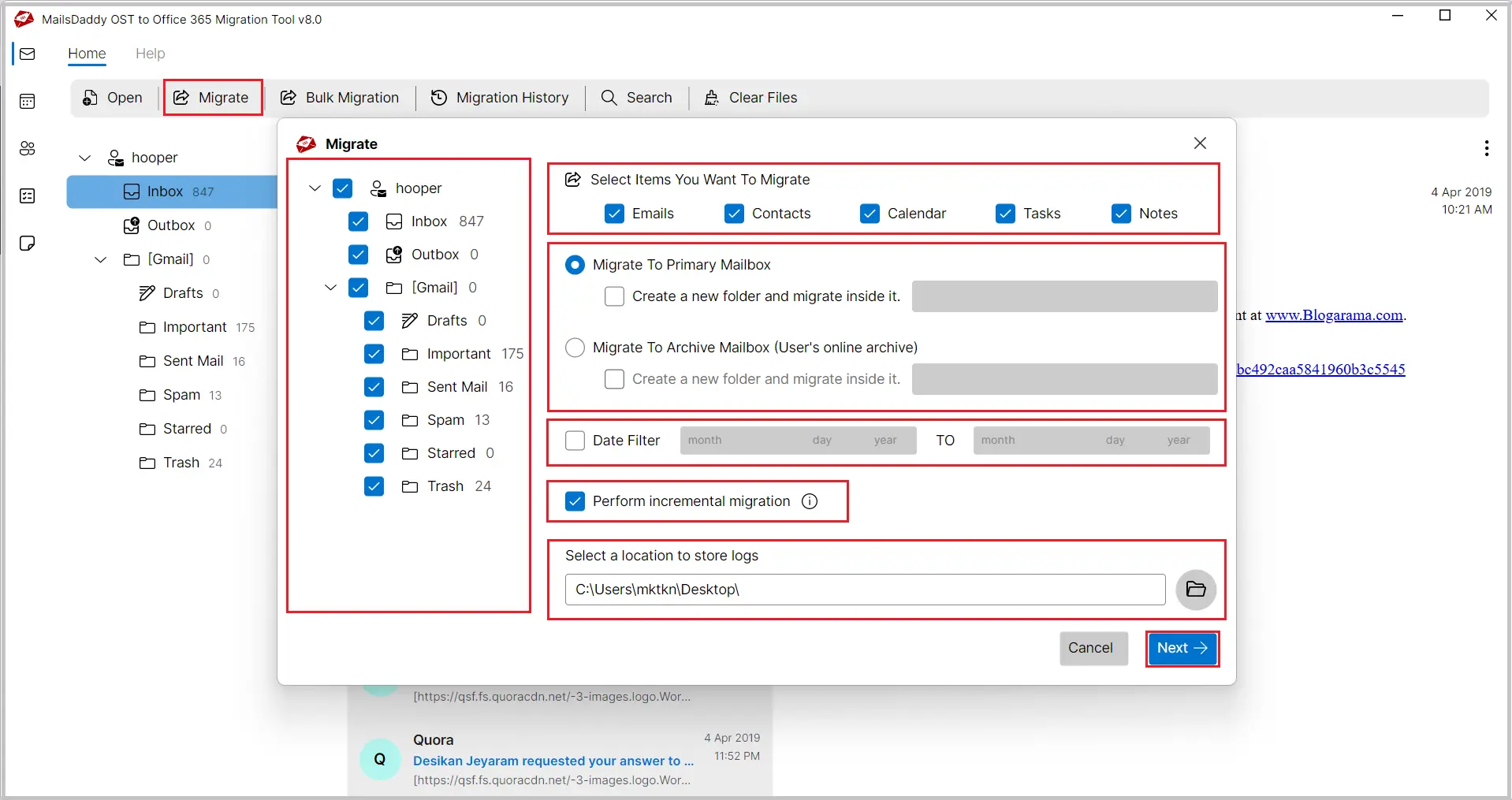
Step 4: Click the “Migrate” button to upload and transfer the offline OST files to your Office 365 account.
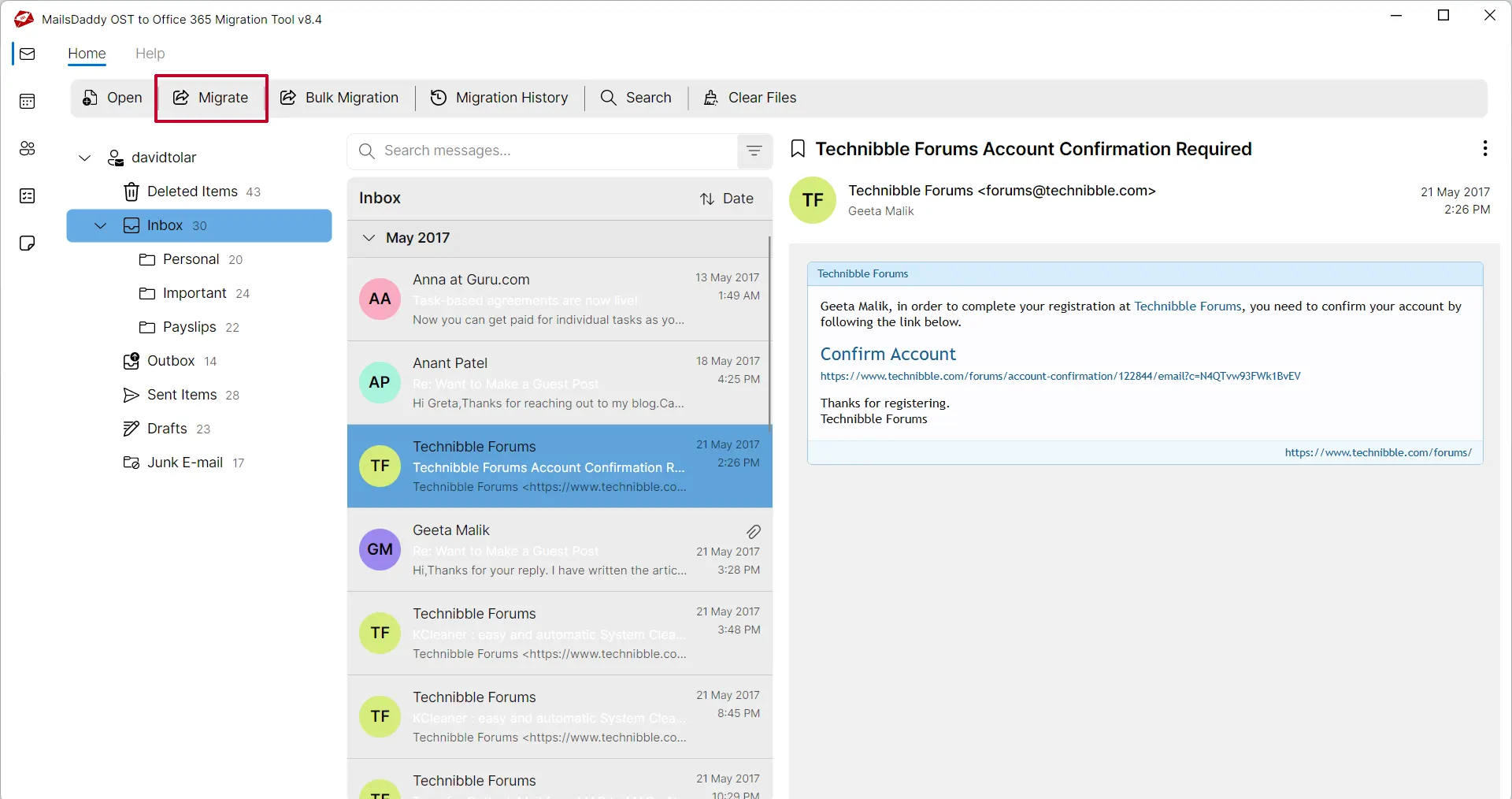
Step 5: From the right-side panel, select the OST file folders. Then choose the specific items—Emails, Contacts, Calendar, Tasks, or Notes—that you want to migrate.

Step 6: Select the mailbox (Primary or Archive) based on your requirement. If you want to migrate data into a specific folder within the Primary or In-Place Archive mailbox, enable the “Create a New Folder and migrate inside it” option and enter the folder name.

Step 7: If you want to migrate emails from a specific date range to Microsoft 365, enable the Date Filter option and enter the start and end dates. You can also enable Incremental Migration if needed.

Step 8: Click the browse icon and choose the location where you want to save the migration log file. After selecting the folder, click the Next button to continue.

migration

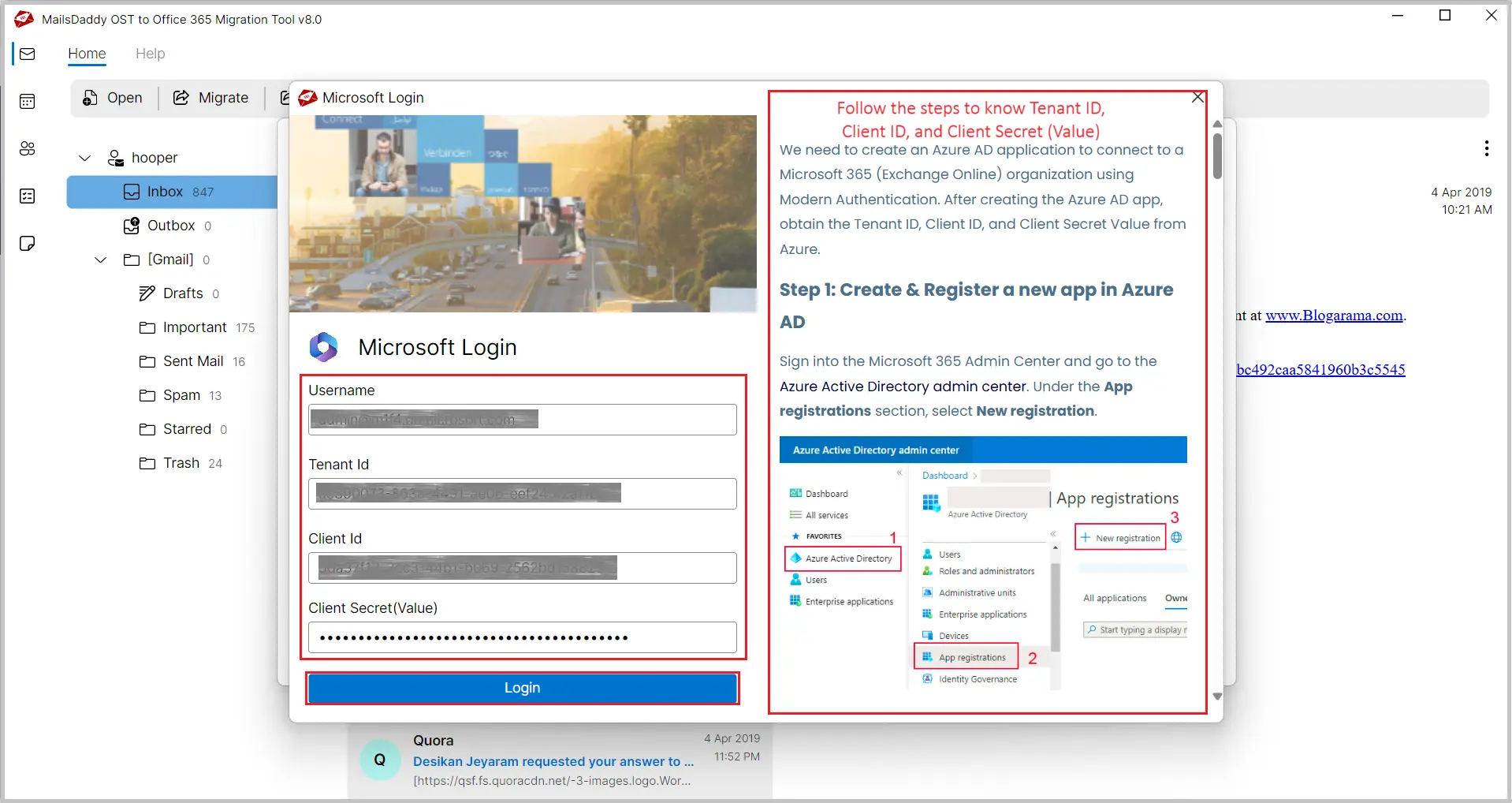
Step 9: Enter your Office 365 login details. If you don’t know the Tenant ID, Client ID, or Client Secret (Value), follow the steps provided on the left side of the screen. Finally, click the “Login” button to start the migration process.

fill login detail

Step 10: The software will begin the migration and display the status through the progress bar.

migration start

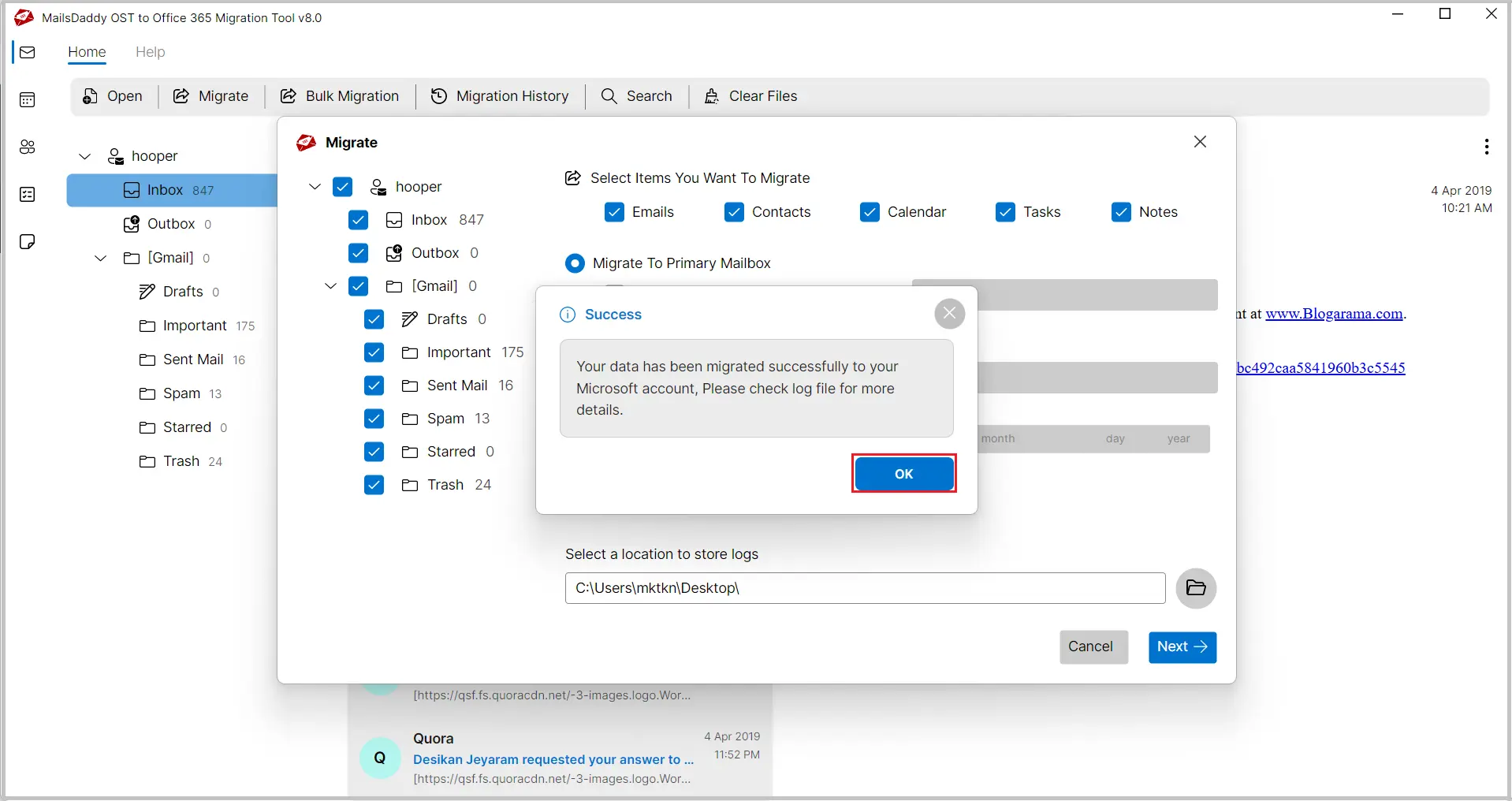
Step 11: The software will display a confirmation message: “Your data has been migrated successfully to your Microsoft account.” Click the OK button to proceed.


confirmation window

Uploading OST data to the Office 365 portal using Bulk Migration is extremely useful when you need to migrate one or multiple OST files into the same or different Microsoft 365 accounts at once. However, before using this advanced feature, you must assign Application Impersonation rights and Full Access permissions to the Admin account.

Step 1: Clear all selected OST files from the preview section, then click the Bulk Migration button to proceed.

step-1

Step 2: You can add all migration-related details using two methods: Add Row or CSV file.

  • If you are unsure how to create a CSV file, you can refer to the sample CSV structure or directly download a sample CSV file by clicking Download Sample CSV File. After updating the CSV file, click Browse CSV File to import all details into the application.
  • step-2

  • To manually add details, click Add Row. Click the three dots (…) to select the OST file location. In the Username field, enter the Microsoft 365 User ID where you want to migrate the OST file data. Then, select the items you want to import into Office 365 (Emails, Contacts, Calendar, Tasks, etc.).
  • step-2

  • In the Migration To section, choose Primary or Archive mailbox. Use the Date Filter option to migrate emails from a specific date range, if required. The Create Subfolder option allows you to move data into a new folder within the selected mailbox. Finally, enable Incremental Migration based on your requirements.
  • step-3

Step 3: Repeat this process to add additional migration details. Once all details are added, select all rows, click the Browse icon to choose a location to save the CSV file, and then click the Next button.

Step 4: Enter the Admin Login details and click the Login button.

step-4

Step 5: Once authenticated, a “Ready to start bulk migration!” message will appear—click OK.

step-5

Step 6: Next, press the Start button to begin the migration. The software will then start transferring OST files to the designated Microsoft 365 mailboxes. You can monitor the progress through the status bar.

create CSV file

Step 6: Finally, a confirmation message will appear stating “Migration Completed.” Click the OK button to finish the process.

confirmation

If you want to import emails from a specific OST file into your Office 365 account, you can use the Search option. Follow the steps below to proceed.

Step 1: Go to the Search tab. On the right, select Folders and choose the desired search criteria (To, From, Subject, Date, etc.) to filter emails. Enter the details and click the Search button.

Step 2: All the filtered emails will appear below. Select the emails you want to migrate to your Office 365 account, then click the Migrate button.

filter step 1

Step 3: Select the target mailbox (Primary or Archive) and enter the folder name where you want to move the filtered emails. Click the Browse icon to choose the location for saving the log file, then click the Next button.

filter step 2

Step 4: Enter your Microsoft 365 user account and other required credentials, then click the Login button.

filter step 3

Step 5: The migration process has now started. Please wait until it completes.

filter step 4

Step 6: Once finished, a confirmation will appear—simply click the OK button to finish.

filter step 5

Migration History is an important feature that helps you track all migration activities. It allows you to verify whether all data has been successfully migrated.

Step 1: To access it, click the Migration History tab. Here, you can view the migration start date and time, NSF file names, and corresponding email addresses.

Step 2: You’ll also see the total data count, migrated data count, and counts for skipped or failed items.

Step 3: Click Open Logs to view a detailed migration report in a .txt file.

Step 4: If any items failed to migrate, you will see a Retry button. To migrate the failed items, click the same Retry button.

migration-history-1

Step 5: Since the logging details are already entered, verify them and press the Logging button to re-migrate the failed items.

migration-history-2