Follow Instructions To Ensure How To Import NSF Into Office 365

Step 1: Download and install (Installation Guide) the application. Launch the software and then click on Get demo button in order to use free trial edition of the software. You can directly activate to full version if you already purchase the software.
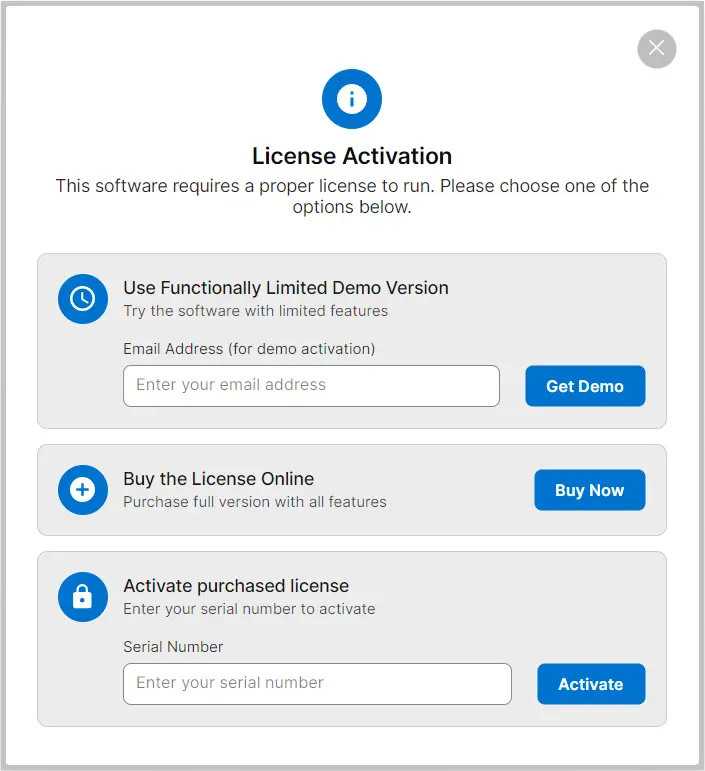
get demo

Step 2: From the first screen, Click on Open button to search or browse NSF files from local system.
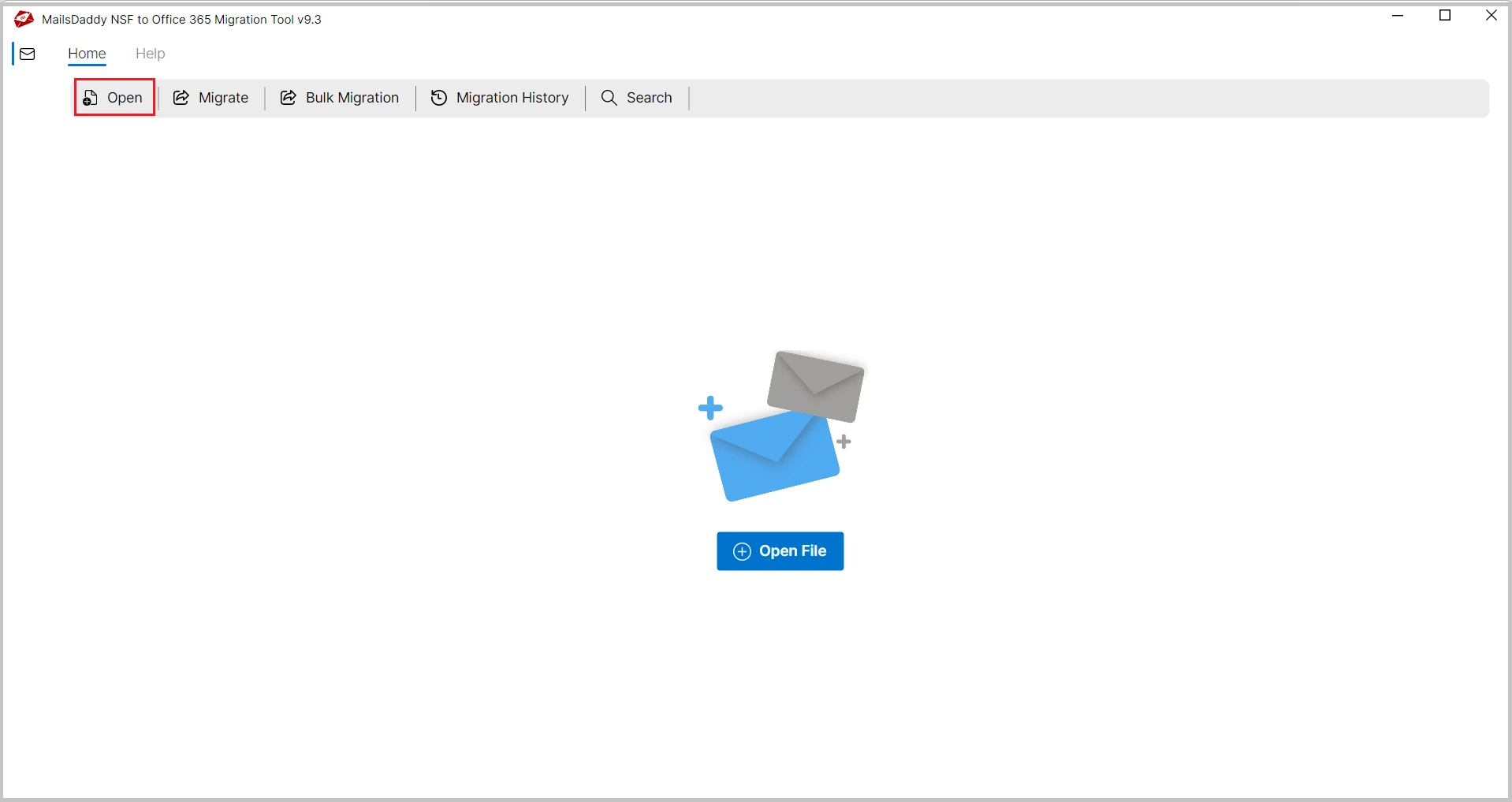
load nsf file

Step 3: Now you can view complete NSF file databases in the software preview section area.
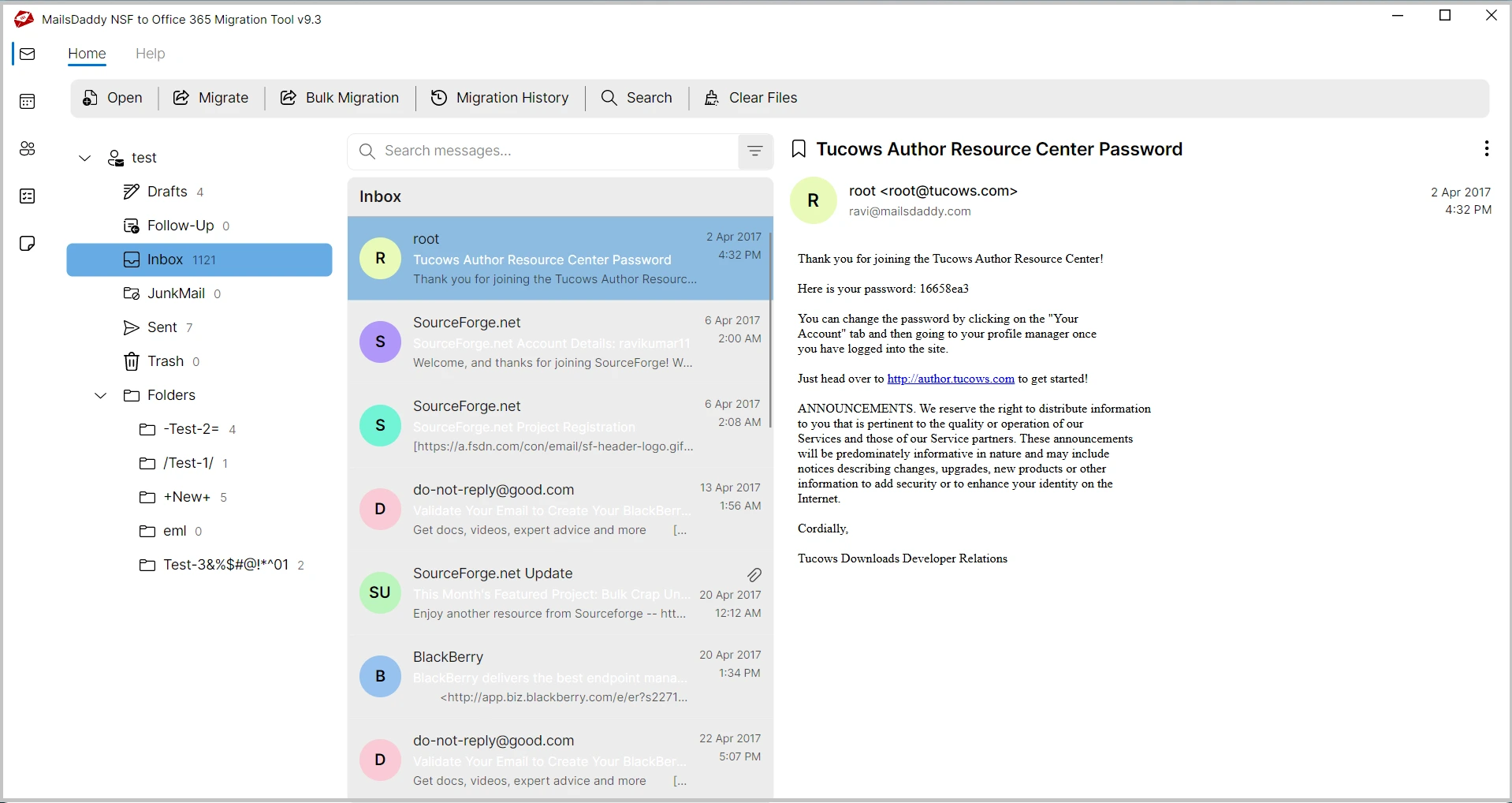
preview window

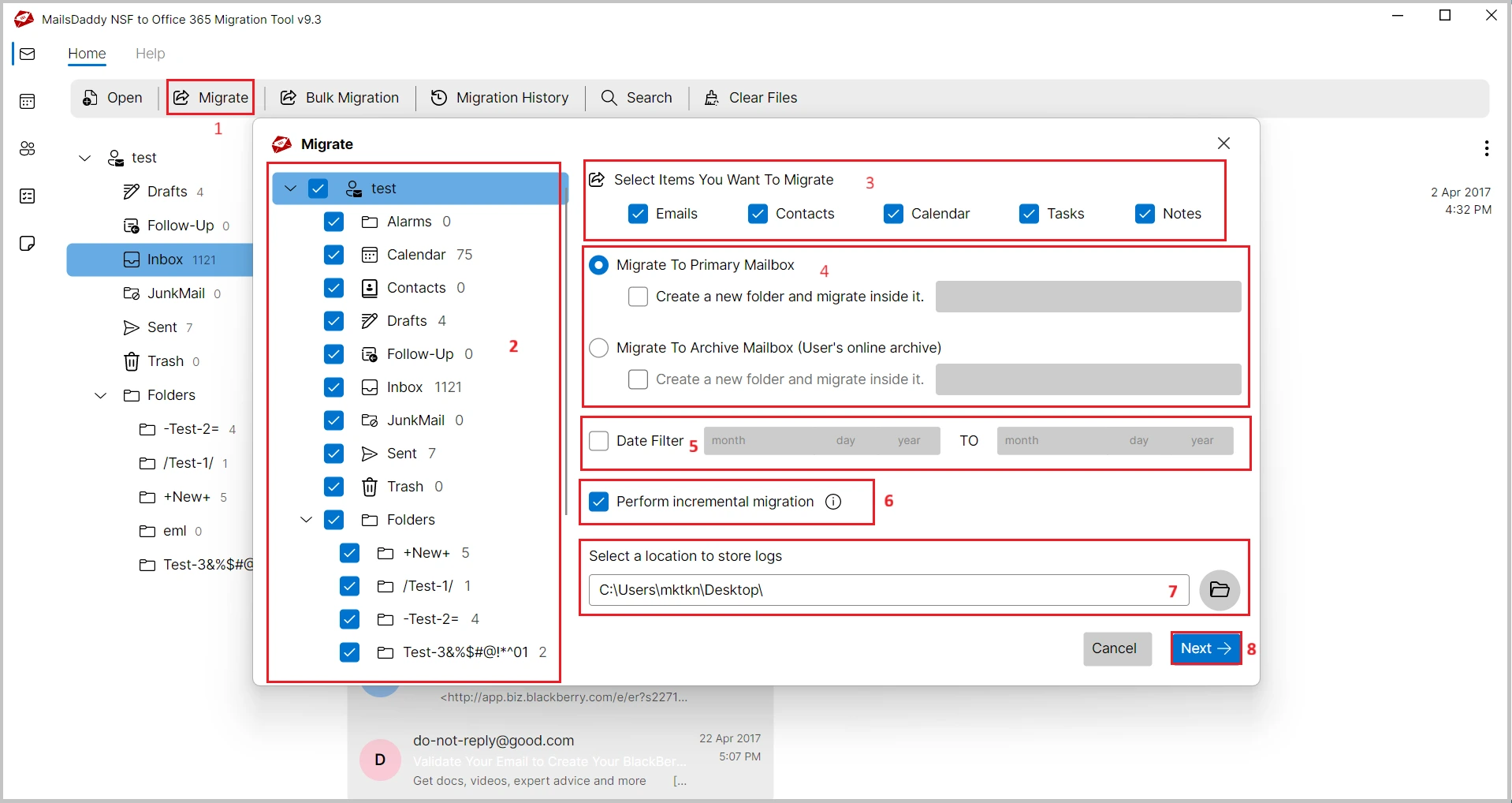
Step 4: Click on Migrate button to upload Lotus Notes NSF files to Office 365 account.

Step 5: From the right side section, select the NSF file folder. Now select the items (Emails, Contacts, Calendar, Tasks, and Notes) you want to migration.

Step 6: Select the mailbox (Primary or Archive) as per your need. If you want to move data in selected forlder of Primary or In-Place Archive mailbox, enable Creare a new Folder and migrate inside it option and put the folder name.

Step 7: If you want to move selected date email database to Microsoft 365, choose Date Filter option and provide the start and end date of migration. Enalbe Incremental migration if required.

Step 8: Now click on browse icon and select the location where you want to save the log file of complete migration. After that press the Next button.
migration

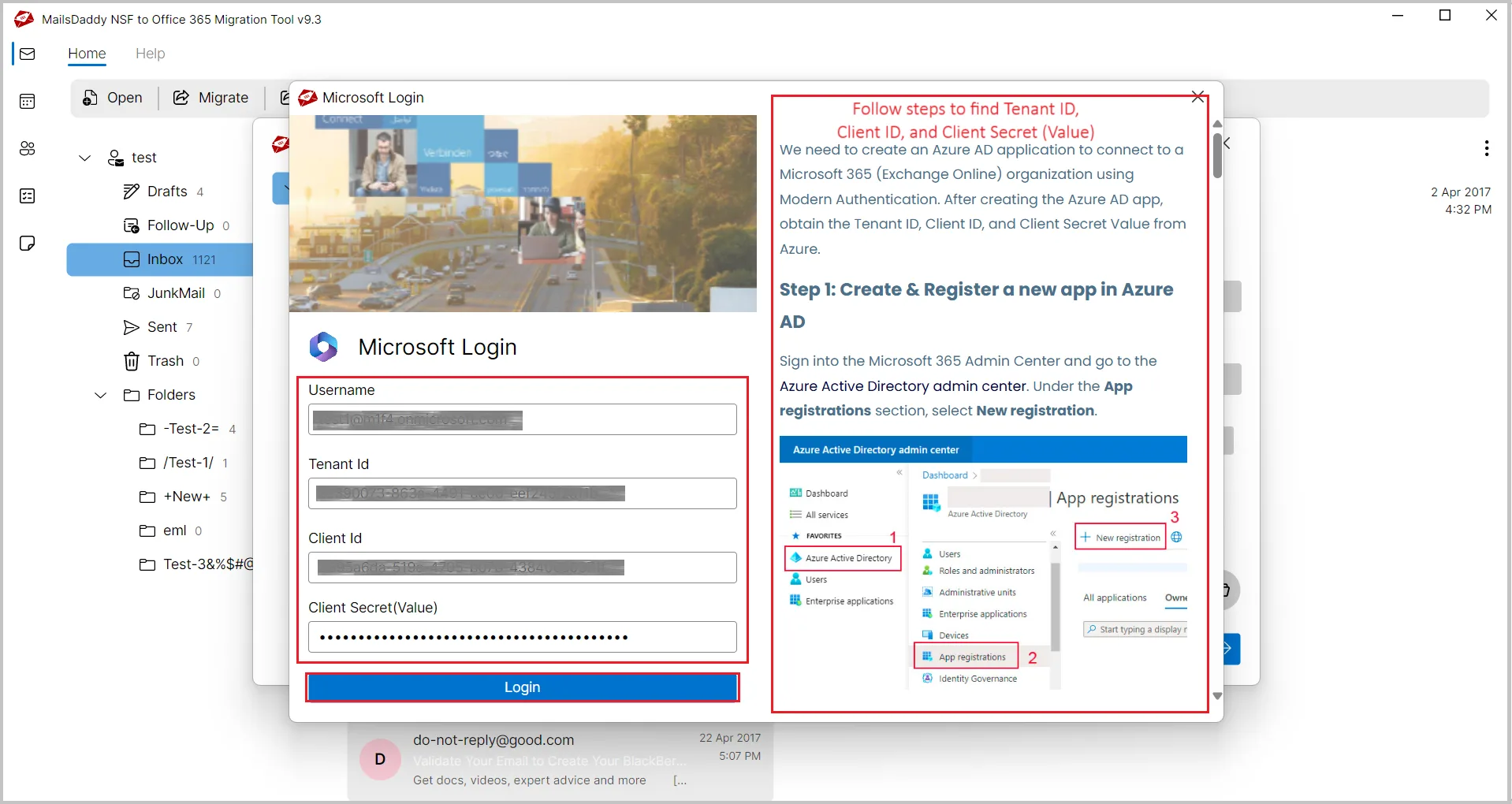
Step 9: Provide Login details of Your Office 365. If you don't know the Tenant ID, Client ID, and Client Secrect (Value), follow all left side given all steps. Finally, click on Login button to strast the migration process.
fill login detail

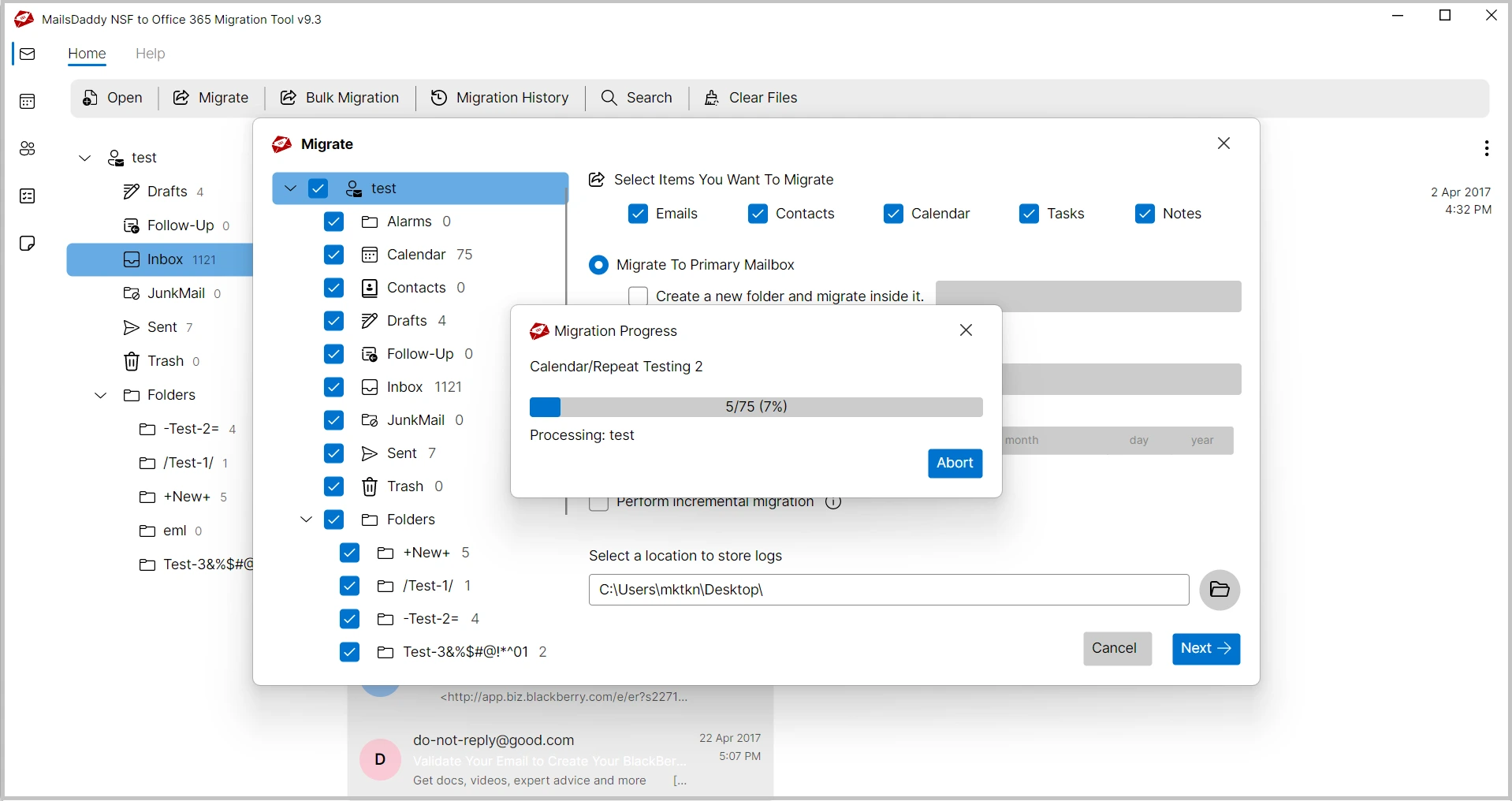
Step 10: The software begins migration and show the status through progress bar.
migration start

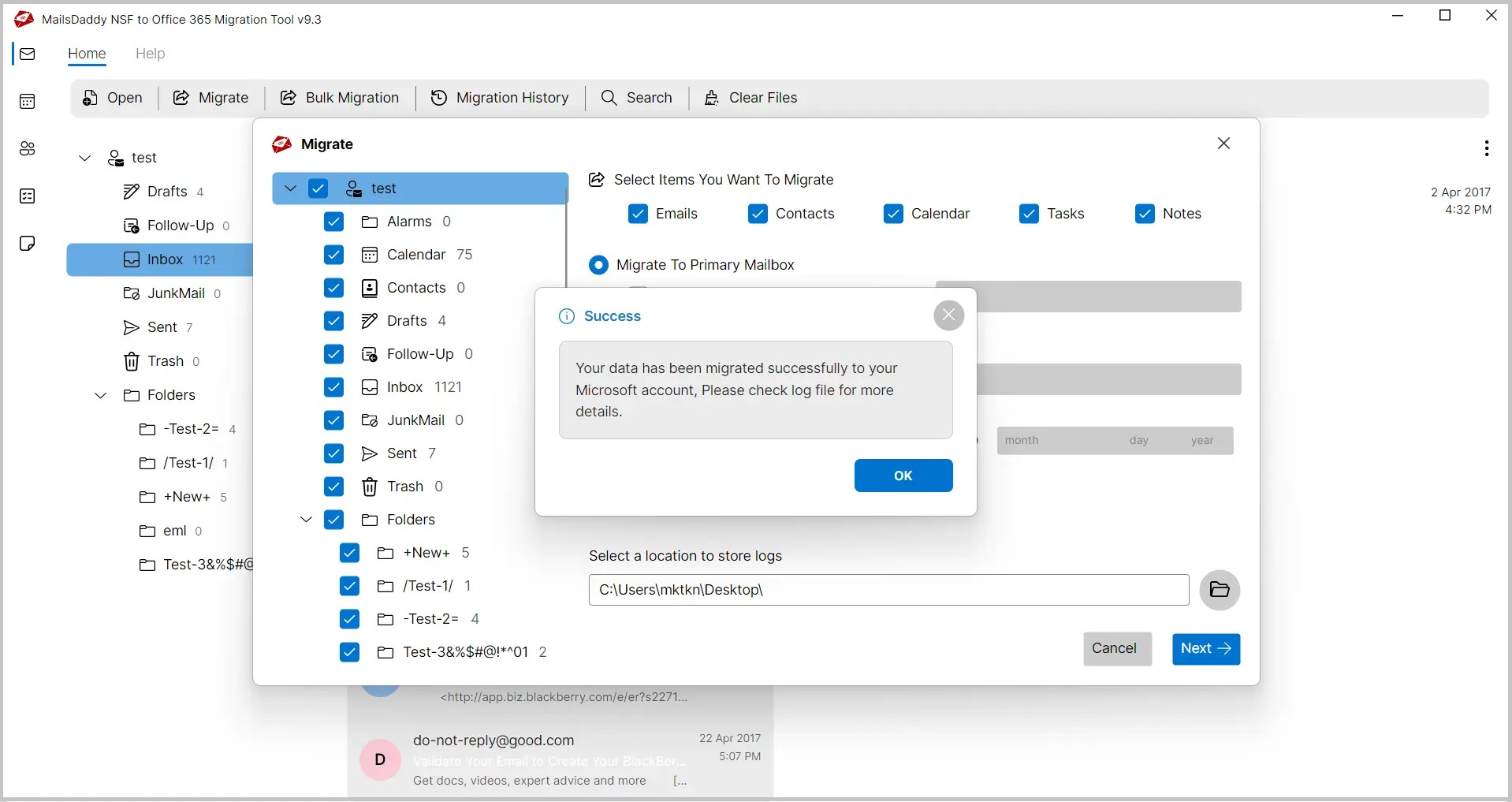
Step 11: The software will display a confirmation message "Your data has been migrated successfully to your Migrosoft account. Click on the OK button.


confirmation window

Uploading IBM Notes data to Office 365 portal using Bulk Migration is very helpful especially when you want to migrate single or multiple NSF file into one or different Microsoft 365 account at one go. But before using this advance feature you need to provide Application Impersonation rights and Full Access to the Admin account.

Step 1: Remove all the selected NSF files from the preview section area and click on Bulk Migration button.

step-1

Step 2: Using two differnt methods (Add Row or Using CSV), you can add all migration related details.

  • If you don't know how to create the CSV file, you can take the help of sanple CSV file srtucture or directly download the sample CSV file by clicking on Download sample CSV file. Update the CSV file and click on Browse CSV file button to add all details in the application.
  • To manually add the details, Click on Add Row. Click on 3 dots ... and select the NSF file location. In the username part, put that Microsoft 365 User Id where you want to move NSF file data. After that select the migration items you want to import into Microsoft 365.
  • step-2

  • In migration to part, select Primary or Archive mailbox. Use the date filter part to migrate selected date database (if required). Use the Create Subfolder section to move data to a folder created in the primary or archive mailbox. Use the Incremental Migration option based on your needs.
  • step-3

Step 3: Select the Browse icon to provide the location of saving CSV file and click the Next button.

Step 4: Now provide Admin Login details and press the Login button.

step-4

Step 5: You will see the Ready to start bulk migration! message box. Here click on OK.

step-5

Step 6: Press the Start button to start the migration process. The software will start migrating IBM Notes NSF files to Microsoft 365 mailboxes. You can check the status through progress bar.

create CSV file

Step 6: later, you will get a confirmation message that Migration Completed. Click on Ok button.

confirmation

If you only want to import specific emails into your Office 365 account, the search option will help. Follow the steps...

Step 1: Select the Search tab. Then select Folders (on the right), and choose from the various meta-searching options (To, From, Subject, date, etc.) to filter emails. Enter the details and press the Search button.

Step 2: Below, you can see all the filtered email databases. Select the emails you want to transfer to your Office 365 account and press the Migrate button.

filter step 1

Step 3: Select the migration mailbox (Primary or Archive) and enter the name of the folder where you want to move all filtered emails. Click the Browse icon and verify the location where you want to save the log file. Then, click the Next button.

filter step 2

Step 4: Enter all your Microsoft 365 user account and other credential details here. Then, press the Login button.

filter step 3

Step 5: The migration process has now begun. Wait for the process to finish.

filter step 4

Step 6: Now you can see, the migration is done. Just press the OK button here.

filter step 5

Migration history plays a crucial role in data migration. It helps you keep track of all the details of the migration. After the migration, you can use this option to check whether all the data was successfully migrated. Let's see how it works.

Step 1: To do this, click the Migration History tab. Here you can see the migration start date & time, NSF file names, and email addresses.

Step 2: You'll also find the total data count, migrated data count, and skipped & failed data counts.

Step 3: By clicking the Open Logs option, you can view a complete migration report in a .txt file.

Step 4: If any item fails, press the Retry button.

migration-history-1

Step 5: Since you've already entered all the logging details, verify it and press the Logging button to migrate the failed items.

migration-history-2